How to choose the perfect crochet hook for the job? The quickest answer to this question is: read the label. But if it were that simple, we wouldn’t struggle so often to choose the right crochet hook for the job. Today’s post is about how to choose the right crochet hook for your project — because the label doesn’t always tell the whole story.
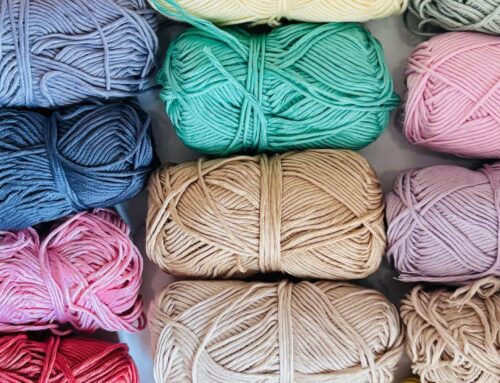
Every ball of yarn has a label. Even hand-dyed yarns come with labels that list the weight, length, and the recommended crochet hook or knitting needles. If you follow the label, everything should turn out fine… right? Well, depending on your project, the label doesn’t always give the full picture for the perfect hook size. Below are some tips on what to look for when choosing a crochet hook or knitting needle — and when to follow the label.
Gauge
It would be pure luck if you always match the exact gauge stated in a pattern. Not everyone crochets or knits with the same tension. If a pattern specifies a preferred gauge, try to stick to it. Increase your hook or needle size if your work is too small, or decrease the size if your project turns out much larger than the stated measurements.
Yarn under or yarn over
One reason to change the hook size from what’s listed on the label is when you use the yarn-under technique. With yarn under, a project can turn out smaller than with the regular yarn-over technique. In this case, you may want to choose a larger hook if you don’t want the project to shrink. Even if the pattern or yarn suggests a 2.5 mm hook, consider using a 3 mm or even a 3.5 mm hook to achieve the same result.
The smaller, the better
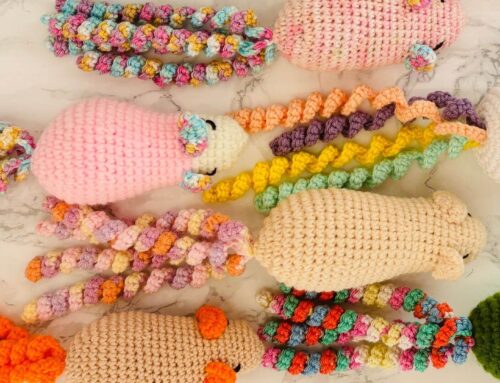
For cute dolls, I prefer to use cotton yarn. Most cotton yarns recommend hooks between 2.5 mm and 3.5 mm. But if I want my dolls to turn out smaller, I prefer using a 2 mm hook with the same cotton yarn. The doll becomes slightly smaller, and the stitches sit closer together because of the smaller hook.
Doll clothes are always one size up!
When making doll clothing, you want the garments to fit properly. So if a 3.5 mm hook makes the clothing too small, switch to a 4 mm hook — even if the label says the yarn is meant for 2.5 mm to 3.5 mm hooks.
Holes… why?
When crocheting or knitting fashion items, thicker yarn often calls for a larger hook or needle. But this is not always best for the look of the final piece. If you notice holes in your work early on, start over and switch your hook or needle. It’s better to add more stitches and rows than to live with gaps in your finished project. For example: thicker yarn often suggests starting at a 6 mm hook, but in many cases a 5 mm works perfectly fine. Just try it out.
Working with double strands
Are you working with double yarn strands? Always choose a larger hook or needle. But don’t automatically pick a hook that is twice the recommended size. If the yarn label suggests a 2.5 mm hook, don’t jump straight to 5 mm. First try 3.5 mm, 4 mm, or even 4.5 mm. It’s better to start a bit smaller and adjust to find the perfect size.
How to choose the right crochet hook for your project
These are the six tips I wanted to share with you. Remember that you can always experiment to achieve the right gauge by trying different crochet hooks and knitting needles before truly starting your new project. The yarn label only gives a suggestion that most people follow. It all depends on how tightly you crochet or knit, your yarn tension, the type of yarn you use, and more. For projects where gauge really matters, make sure to follow it carefully — you don’t want your sweater to turn out too small or far too big.